There are no items in your cart
Add More
Add More
| Item Details | Price | ||
|---|---|---|---|

Kolkata, West Bengal, INDIA
Mon Dec 1, 2025
"“What I love about watercolor is that a lot of happy accidents occur.” — Jane Seymour
Watercolor is often described as the most honest medium. It reveals everything — every hesitation, every brushstroke, every excess drop of water. Unlike opaque mediums such as acrylic or gouache, watercolor offers very little room for correction. Once a stroke is laid, it becomes part of the painting’s history. This unforgiving nature is one of the primary reasons why mastering watercolor is difficult. Water behaves unpredictably. Pigment spreads, blooms, and blends on wet paper in ways that can surprise even experienced painters. Controlling water ratio, timing, pigment strength, drying stages, and brush pressure requires deep sensitivity and practice. The lightness, transparency, and luminosity that make watercolor magical are also what make it challenging — mistakes cannot be hidden, only embraced or transformed.
Yet, mastery is possible. The path begins with fundamentals: understanding paper quality, brush characteristics, pigment behavior, and water control. Consistent practice with simple value studies and limited palettes develops intuition. Studying master watercolorists and doing step-by-step master copies builds muscle memory and confidence. Most importantly, developing the right mindset — patience, observation, and letting go of perfectionism — turns frustration into progress. Watercolor rewards persistence. It teaches us timing, restraint, and acceptance. With time and the right guidance, what once felt uncontrollable becomes graceful and expressive. And that is the beauty of the journey — the medium shapes the artist as much as the artist shapes the medium.
Keep painting. Keep observing. Let the water teach you.
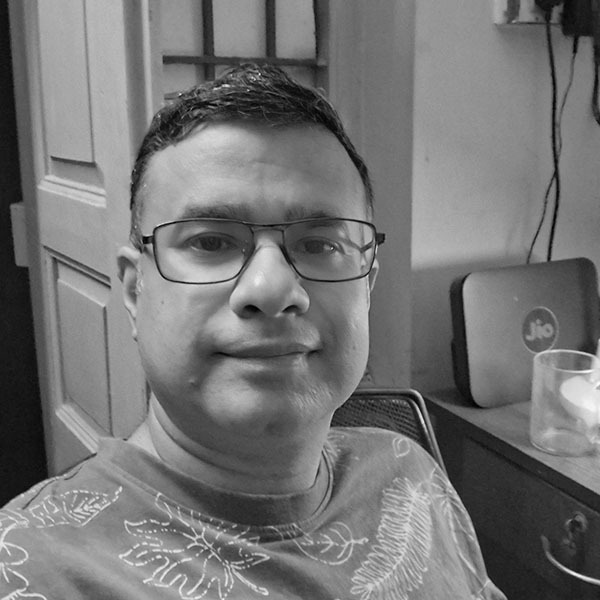
ANINDYA BHATTACHARYA
a 'more-than' a watercolor enthusiast
 Launch your Graphy